Setup
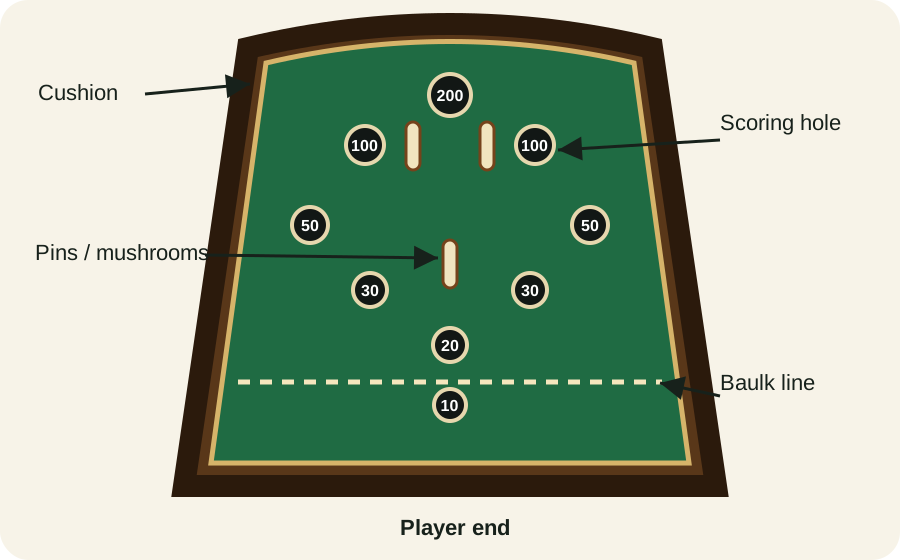
The table is level, pins are placed on their designated spots and the available balls are set for play. The order of play is decided by the match format or local rule. Shots are played from the baulk end, commonly from within a marked D.
Legal play
- The cue tip must strike the cue ball cleanly.
- A scoring ball must enter a numbered hole without an intervening foul.
- The player continues after a legal score and stops after a non-scoring shot.
- Balls returned by the mechanism may be reused while the table remains open.
Scoring and breaks
Each hole has a fixed value. The points made during one visit form a break. A player's match total increases when the break is completed without a rule that cancels it. The red ball commonly doubles a hole value.
Common fouls
- Knocking over a pin
- Playing a ball from outside the permitted starting area
- Touching or moving a ball improperly
- Striking before balls have settled
- Causing a ball to leave the table
- Double-hitting, pushing or scooping the cue ball
The exact penalty is rulebook-dependent. It may end the turn, cancel the current break, deduct points or impose a fixed penalty.
Pin penalties
Traditional three-pin tables normally place two light pins near the high-value holes and a black pin in front of another scoring area. A light-pin foul often loses the current break. The black pin can carry a larger penalty, sometimes involving the player's accumulated score. This is why an apparently open high-value shot may be strategically poor.
The timer and final phase
A timed game commonly lasts around 15 to 20 minutes, but league rules vary. As time expires, the table mechanism stops returning potted balls. Players continue with the balls still available under the local ending rule.
Match formats
Leagues may play individual games, multiple singles, pairs, team aggregates or combinations. League points, handicap systems and order-of-play rules are organizational rules rather than universal laws of the game.
Known variations
Four-pin versions survive in parts of East Anglia. Jersey and other regional forms may use different table layouts and starting positions. Some local rules differ on the red ball, break accounting and the treatment of pins.
Primary references
- All England Bar Billiards Association
- AEBBA rules and playing conditions (PDF)
- Norwich four-pin league rules
Last reviewed: August 2, 2026. Rules can vary by league and table type; consult your local competition rules.